Lehrstuhl für Allgemeine Didaktik und Mediendidaktik
Kurzportrait
Allgemeine Didaktik beschäftigt sich mit Theorien und Modellen zur effektiven Unterrichtsgestaltung. Sie bietet Lehrpersonen ein wissenschaftlich fundiertes Handlungs- und Reflexionswissen zur Planung, Durchführung, Beurteilung und Verbesserung ihres Unterrichts. Mit ihrem fächerübergreifenden Anspruch liefert sie einen Beitrag zur Verständigung über Fächergrenzen hinweg. Allgemeine Didaktik hat vielfältige disziplinäre Bezüge, von der Bildungstheorie bis zur empirischen Lehr- und Lernforschung. Sie kooperiert mit den Fachdidaktiken und den Fachwissenschaften der schulischen Fächer, um gemeinsam Unterricht zu entwickeln.
Mediendidaktik erarbeitet Leitlinien zum zielgerichteten Einsatz von Informations- und Kommunikationsmitteln in Lehr- und Lernkontexten. Dies umfasst die Entwicklung und die Auswahl von Lehr- und Lernmedien, die Planung medial unterstützter Unterrichtseinheiten sowie deren Umsetzung und empirische Überprüfung. Ein besonderer Fokus liegt dabei auf digitalen Lehr- und Lerntechnologien. Im Idealfall soll der Einsatz solcher Medien den Unterricht anschaulicher, aktivierender, motivierender und letztlich wirkungsvoller machen. Ausserdem sollen Lernende befähigt werden, diese Medien selbstbestimmt, kompetent und verantwortungsbewusst zu nutzen.
Forschungsthemen
Unterrichtsmethoden und Überzeugungen von Lehrpersonen
Personalisierte Lehr- und Lernformen
Integration digitaler Medien in Schulen
Informations- und Medienkompetenz
Digitale Formate der Lehrerinnen- und Lehrerbildung
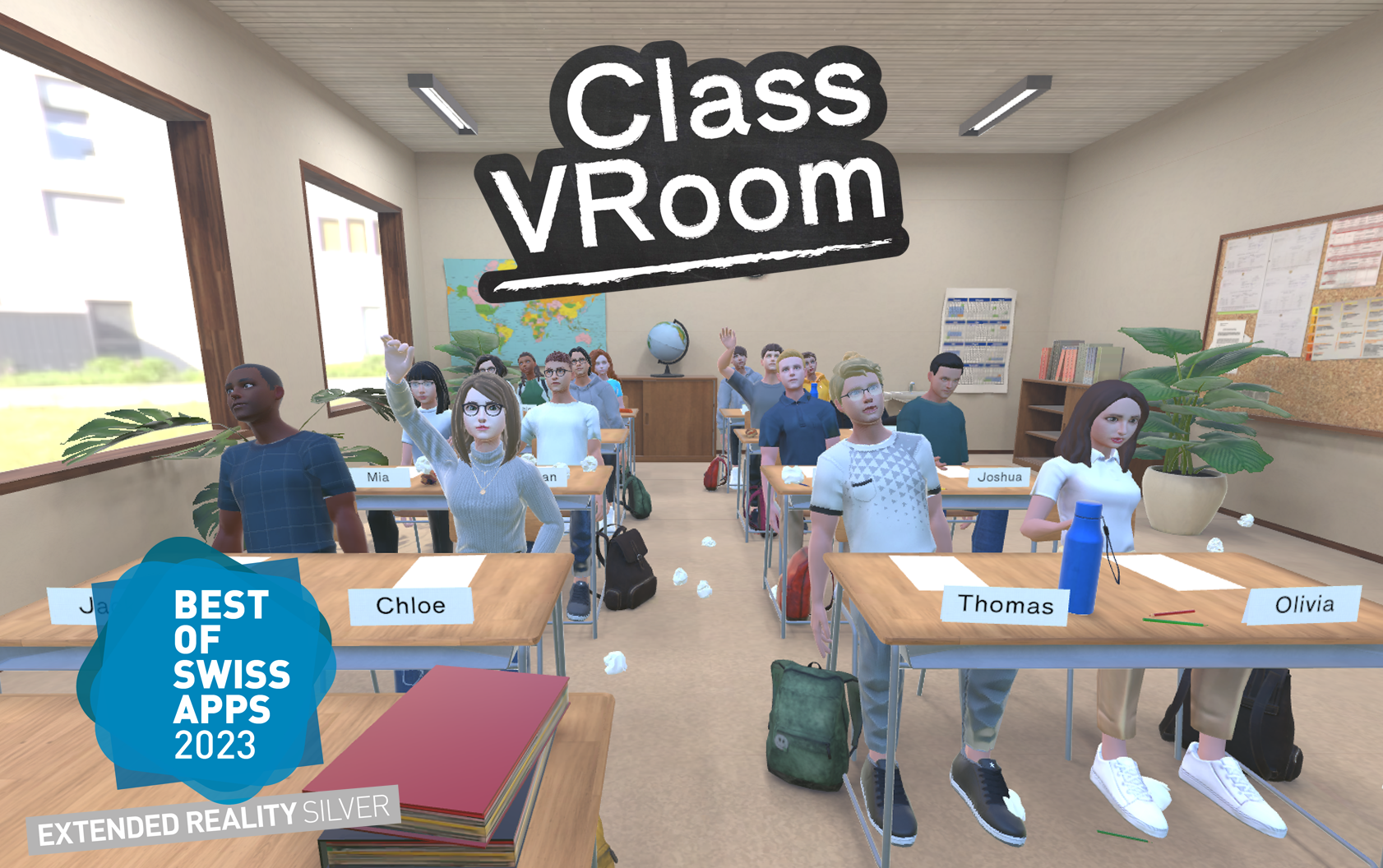
Serious games und gamifizierte Lernformen
Aktuelle Publikationen / Recent Publications
- Candido, V., Lam, F., Petko, D., & Cattaneo, A. (2026). No News Is Good News Testing Modality and Redundancy in Immersive Augmented Reality. Journal of Computer Assisted Learning, 42(1), e70185. https://doi.org/10.1002/jcal.70185
- Consoli, T., Petko, D., Gonon, P., & Cattaneo, A. (2026). Herausforderungen bei der Integration generativer Künstlicher Intelligenz in die Berufsbildung. Transfer. Berufsbildung in Forschung und Praxis. https://doi.org/10.64829/15177
- Brianza, E., Schmid, M., Tondeur, J., & Petko, D. (2026). Contextualizing Student Teachers’ TPACK: Understanding the Benefits of Field Experience. Technology, Knowledge and Learning, 1-35. https://doi.org/10.1007/s10758-026-09961-y
- Martínez-Moreno, J., Zhou, X., Petko, D., & Chiu, T. K. (2026). Motivation to shape the future of education with Artificial Intelligence: An international comparison between Switzerland and China. Computers and Education Open, 10, 100327. https://doi.org/10.1016/j.caeo.2025.100327
- Antonietti, C., Consoli, T., Schmitz, M.-L., Cattaneo, A., Gonon, P., & Petko, D. (2025). Digital constructivists, activators or presenters? Different profiles of technology integration among Swiss upper secondary school teachers. Computers & Education, 227, 105225.
https://doi.org/10.1016/j.compedu.2024.105225 - Antonietti, C., Schmitz, M. L., Consoli, T., Cattaneo, A., Gonon, P., & Petko, D. (2025). Examining technology integration in upper secondary schools: A comparative analysis across school programs and subjects. Technology, Knowledge and Learning, 1-26.
https://doi.org/10.1007/s10758-025-09889-9 - Candido, V., Cattaneo, A., & Petko, D. (2025). Exploring multimedia principles and learning from errors in augmented reality and video. Learning and Instruction, 101, 102244.
https://doi.org/10.1016/j.learninstruc.2025.102244 - Cattaneo, A., Schmitz, M.-L., Gonon, P., Antonietti, C., Consoli, T., & Petko, D. (2025). The role of personal and contextual factors when investigating technology integration in general and vocational education. Computers in Human Behavior, 163, 108475.
https://doi.org/10.1016/j.chb.2024.108475 - Consoli, T., & Petko, D. (2025). Which educational approaches predict students’ generative AI confidence and responsibility?. Computers and Education: Artificial Intelligence, 9, 100431.
https://doi.org/10.1016/j.caeai.2025.100431 - Désiron, J. C., Wolfensberger, A., Clack, L., & Petko, D. (2025). Do prompts to foster negative knowledge lead to more mistakes? The effects of exploratory behavioural prompts in medical training. Interactive Learning Environments, 1-13.
https://doi.org/10.1080/10494820.2025.2521332 - Désiron, J. C., Schmitz, M. L., & Petko, D. Teachers as creators of digital multimedia learning materials: are they aligned with multimedia learning principles. Technology, Knowledge and Learning, 30(2), 637–653. https://doi.org/10.1007/s10758-024-09770-1
- Michos, K., Schmitz, M. L., & Petko, D. (2025). Learning Analytics in Schools: Is Digital Data Use Influenced by Teacher-Level or School-Level Factors?. Journal of Learning Analytics, 1, 12(3), 87–101. https://doi.org/10.18608/jla.2025.8567
- Petko, D., Mishra, P., & Koehler, M. J. (2025). TPACK in context: An updated model. Computers and Education Open, 100244. https://doi.org/10.1016/j.caeo.2025.100244
- Schmitz, M. L., Antonietti, C., Consoli, T., Gonon, P., Cattaneo, A., & Petko, D. (2025). Enhancing teacher collaboration for technology integration: the impact of transformational leadership. Computers & Education, 234, 105331. https://doi.org/10.1016/j.compedu.2025.105331