CuCo – Customized Confidence Ratings in Digital Learning Environments
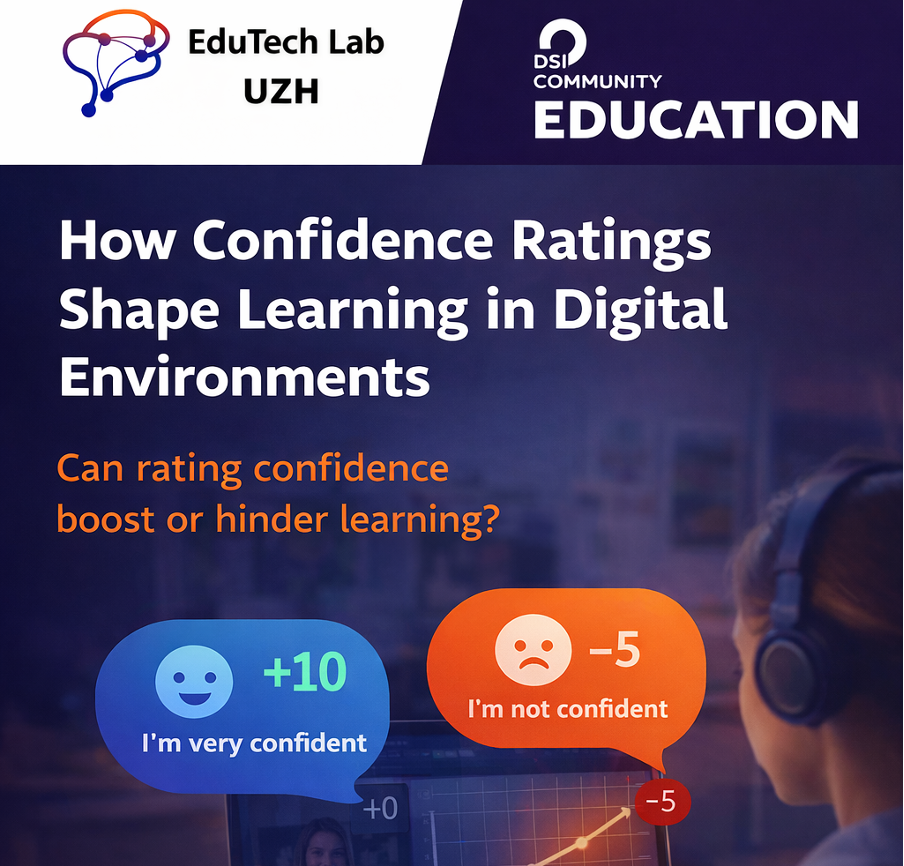
Digitalization has shifted many learning activities online, creating opportunities to tailor learning environments to individual learner characteristics (e.g., metacognitive ability, self-confidence). Integrating customized Confidence Ratings (CR) – having learners’ rate how confident they are in their answers – could be such an opportunity to boost learning during digital learning sessions. The cognizant confidence hypothesis suggests that CR activate pre-existing confidence beliefs subsequently impacting performance. Hence, high-confidence learners would benefit from CR, while low-confidence learners would not.
As CR are used in educational science to gauge metacognitive abilities in retention tasks (see Beege et al., 2020) it is paramount to assess whether implementing CR in a digital learning session (instead of a standardized reasoning task) affects performance and whether self-confidence moderates this effect. The aim is to customize CR integration in a digital learning session to boost learning for all (not mainly high self-confidence) learners.
Summarized, CuCo will address a key issue in educational science and investigate the interaction of learner characteristics with a customized digital learning environment. Knowledge gained by CuCo can then be used in digital learning exercises at UZH and through the DSI communities we can connect with teachers and support them to incorporate a research-based tool to boost learning for their pupils.
Partially funded by the Community Education of theDigital Society Initiative (DSI) at the University of Zurich
Project Lead:
Dr. Helene M. von Gugelberg (UZH)
Project Collaborators:
Jun Prof. Dr. Jana Jungjohann (TU Dortmund)
Prof. Dr. Damian Birney (USYD)
Prof. Dr. Sascha Schneider (UZH)